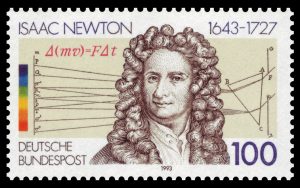
 “What would you do if Isaac Newton walked through the door?”
“Isaac who?” came the reply from the human resource person.
This personal exchange actually happened at a Silicon Valley Job Fair. Although it might be tempting to bash HR for seeking only narrow criteria to fill overly specific job descriptions – searching for round pegs to fit round holes – a deeper look will find the fundamental weakness: hiring practices in the high tech industry in general.
The rush to round peg specificity is now aided by dependence on computerized key word searching of résumés. The candidate search is hampered by its very convergence on perfection. Finding the “perfect candidate” means only finding the perfect fit to the job description. And that’s the problem. The process of scanning résumés and retrieving them by key words is subject to a logical flaw: Those creating the job description and searching the key words must know in advance the entire spectrum of such key words to get the person best able to contribute. Most likely, that will never happen. Only those deep into a narrow field will be selected. The process fosters pigeonholing and hyper-specialization.
By contrast invention and innovation are the overused words of today, from Obama’s “innovation economy” to car and computer ads. Such talk is talked but the walk is not walked in Silicon Valley.
Do you think of yourself as a broad innovator and technical Renaissance Man/Woman? That, in this age of hyper-specialization, may get you a latté in Silicon Valley. It will not get you hired.
In every one of the last half-dozen jobs I have held, I have within a few months produced a major invention that has been significant to the company’s future. All have been in different fields. But in looking for jobs, I hear, “We don’t need anybody like that.”
It would seem that an innovator is to be avoided. Why? Perhaps it’s the shallow nature of education in high-tech disciplines.
As an interviewer, I pose broad questions like, “See that Coke can? Will you please describe the thermal processes affecting the temperature of the fluid inside?”
Most cannot.
 How is it possible for candidates to have graduated from good universities with high tech degrees, to have worked in a specialized field long enough to get those buzzwords on their résumés, and still not possess gut understanding of their disciplines? Perhaps the problem is the way in which they have been taught. Having grown up in a single high-tech field, without the depth in fundamentals and cross-fertilization from outside, it never occurs to them that those fundamentals and ability to innovate are a person’s true strength, not the buzzword of the month. Candidates get hired only from within specialized industries, completing the cycle. Technologies and whole ways of thinking get inbred.
On the other end of the spectrum, having a broad background and the ability to see the rich analogies among disciplines can help the Renaissance Engineer/Scientist make huge conceptual leaps where others see no connection. Richard Feynman in Volume II of his Lectures on Physics called this insight a “physical understanding” of the underlying mathematics, “absolutely necessary for a physicist.”
Those rich analogies can extend beyond the purely technical, ranging from initial concept to manufacturing, business, marketing and sales to the end user of a product. The Renaissance Person with vision of the complete process can see it all.
In short, a person with a broad, multidisciplinary foundation and experience can have a huge impact on a company. Are we looking for them? Are they already sitting in the next cubicle?
Back to finding candidates. Yes, it’s easy just to look for the round peg, finding the best fit to the pre-determined criteria. But consider the waste that results from talent being squeezed into the narrow job description. Isn’t it better to tailor the position to fit the exceptional person?
If invention and innovation are thought to be the ultimate source of wealth, which is the better approach to hiring?
So, here’s the real question: What will you do when the next Steve Jobs walks through your door?
Written by and permission from:
Bill Alston, Engineering Consultant FEA CFD
408-857-5592 bill@alston-associates.com
www.alston-associates.com